Adelaide Dolphin Sanctuary |
The Adelaide Dolphin Sanctuary is one of the gems of metropolitan Adelaide.
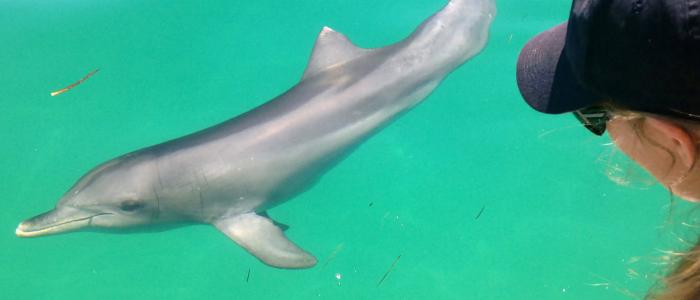
Located only 20 minutes from Adelaide, this marine park is home to around 20 resident bottlenose dolphins, with another 400 transient dolphins that visit at various times. These wild dolphins come here to feed, play, socialise and nurse their calves.
Inside the Sanctuary you will find a 10,000 year-old mangrove forest, as well as seagrass, saltmarsh, tidal flats and tidal creeks, which all provide habitat and food for the dolphins. The Sanctuary is a part of South Australia's largest port, and has a number of Aboriginal and European cultural and historical places of interest.
The area is also a popular bird watching site and shares most of its northern coastal habitat with the Adelaide International Bird Sanctuary. Other wildlife that can easily be spotted within the Sanctuary are sting rays, long nosed fur seals and endangered Australian sea lions. There are several locations that offer a great vantage point to observe wildlife by land.
Why not come along and try your hand at dolphin and bird watching, kayaking, paddle boarding, and fishing?
About the dolphins
Three species of dolphin are found in South Australia: the Indo-Pacific bottlenose dolphin (Tursiops aduncus), found in coastal waters such as those of the Adelaide Dolphin Sanctuary; the common bottlenose dolphin (Tursiops truncatus), which live along oceanic coasts and in the deep water off South Australia; and the short-beaked common dolphin (Delphinus delphis), which may be seen in the gulfs but usually inhabit deeper waters.
In the Adelaide Dolphin Sanctuary there are approximately 40 Indo-Pacific bottlenose dolphins that are frequently observed, with more than 300 of various species recorded as visitors. Extensive research has been undertaken by the Whale and Dolphin Conservation, and Dr Mike Boseley, on the behaviour and life-cycle of the sanctuary animals and the adverse effects of human interference.
Indo-Pacific bottlenose dolphins grow to around 2.5 metres in length, and weigh about 160 kilograms. They live for up to 40 years. Like whales, dolphins breathe through a blowhole on the top of their heads.
Dolphins can dive to depths of more than 500 metres, but they must surface for air every few minutes. Dolphins have excellent vision above and below the water.
Most bottlenose dolphins are highly sociable and often can be observed as part of a group known as a pod. These pods of up to 15 dolphins hunt, play and help protect each other. Most members of the pod are unrelated, although mothers may stay with their offspring for up to eight years. Adult males generally form separate bachelor groups of two or three, forming bonds that may last a lifetime.
Females usually become sexually mature between the ages of five and 12 and males usually become sexually mature between the ages of 10 and 12. Bottlenose dolphins may breed throughout the year, but they usually give birth to their calves in late summer. A female may be pregnant for up to 12 months and a calf may suckle for as long as 18 months, remaining with the mother for many years. Local females usually produce offspring once every three to four years.
A natural bond is formed between female dolphins and those pregnant or with calves. These groupings are called "maternity pods". When dolphins are first born they are usually about 1 metre in length and dark in colour. They tend to be born tail first and are able to swim and breathe within minutes of birth.
Human activities are threatening the survival of dolphins. Pollution, stormwater and rubbish represent a major threat affecting food supplies. Sanctuaries like the Adelaide Dolphin Sanctuary are vital to ensure the continued survival of these wonderful creatures.
Open Daily
Dolphins and other wildlife use the Adelaide Dolphin Sanctuary all year round. Because of the protection provided by mangroves and other types of vegetation, there is always a protected spot to enjoy the water, even on the days when weather is not that favourable.
The best time to spot the Sanctuary's dolphins are on calm days with little wind, when you can easily see the dolphins on the water's surface.
Summer
Summer is the dolphin calving season in the Sanctuary, so it is the perfect time to spot a female with her newborn calf, a special and unique sight. It's also the perfect time to spot migratory shorebirds feeding within intertidal zones.
Autumn
The autumn months are usually the best time for calm winds; so pack your camera, a jumper, and head on down!
Winter
During the colder months dolphins are often found around areas of the Inner Port. Here you will be rewarded with an impressive view from the elevated points around the Port Adelaide waterfront. Winter also brings great numbers of long-nosed fur seals and even endangered Australian Sea Lions to the Sanctuary breakwaters.
Spring
As the warmer weather approaches, why not grab a picnic blanket and head down to Garden Island for some dolphin watching. Hint - while you are there keep your eye out for others using their cameras, it generally means that there are some dolphins nearby!
Visitor Information, Bookings and Park Management:
Black Hill National Park and Wildlife Service Office
Phone: (+61) 8336 0901
Getting There
The southern end of the Sanctuary is located only 20 minutes' drive from the city of Adelaide and is easily accessible from Historic Port Adelaide. Other access points to the Sanctuary include Garden Island, St Kilda, Snowdens Beach, Outer Harbour and North Haven Marina.
❊ Address ❊
⊜ Garden Island Rd, Garden Island 5015 View Map
✆ Telephone: (08) 8405 6560
❊ More Information ❊
→
www.parks.sa.gov.au
➼ www.chauncyvale.com.au
Update Page